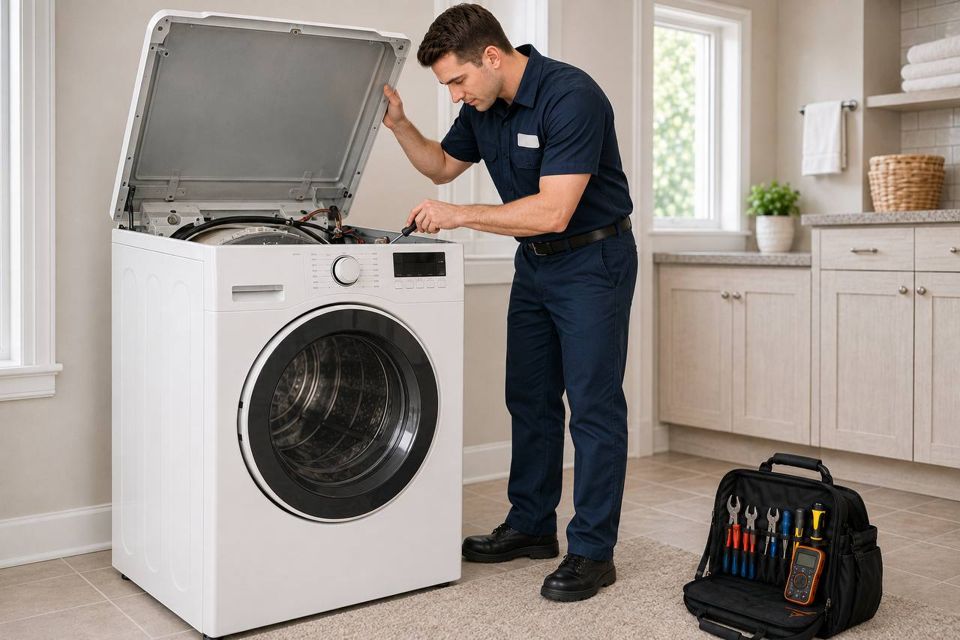
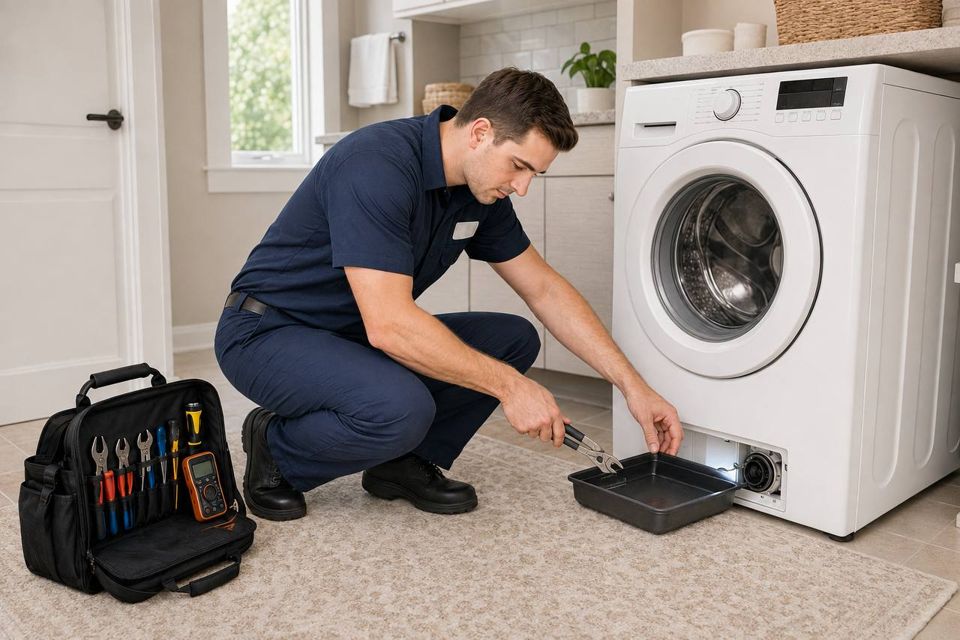
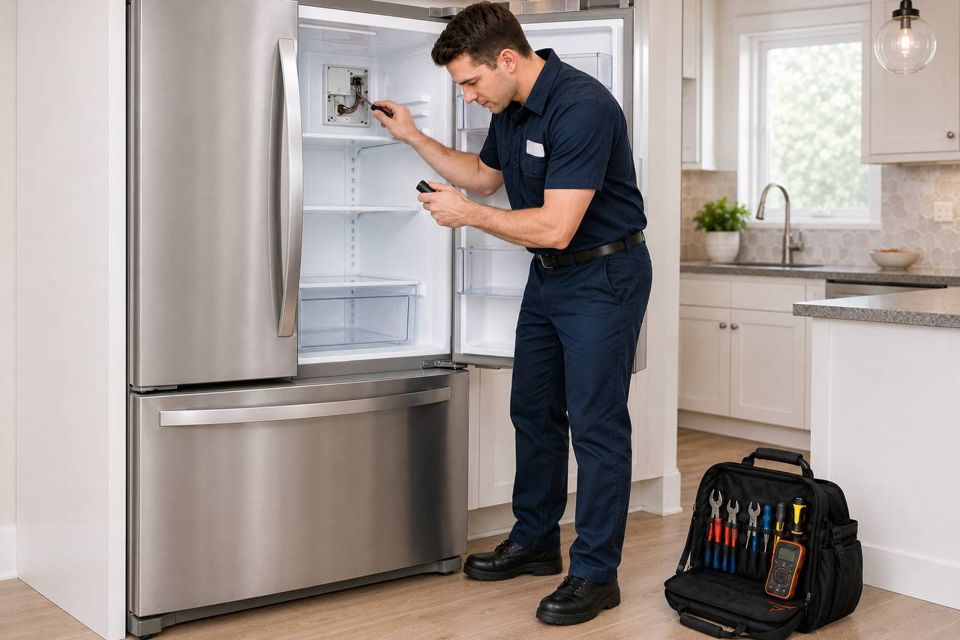
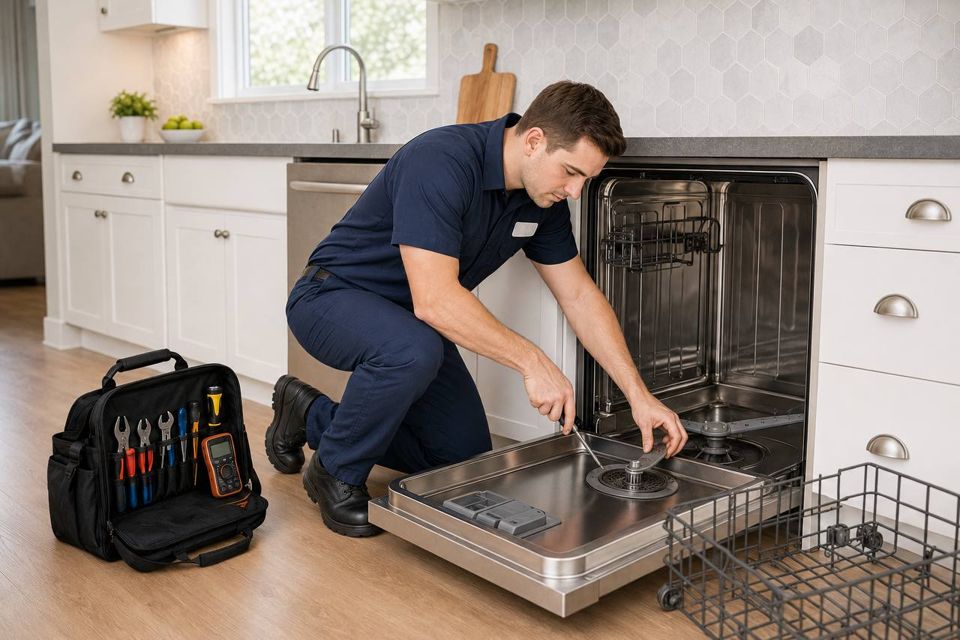
A dryer that runs but does not dry is the most-heard sentence on the intake line, and the honest answer usually lives in the vent rather than the machine. The sweep on a dryer starts at the wall, not the drum.
Gig Harbor dryers work evenings and weekends, because their households cross the Narrows before seven and return after six. That schedule is built into the harbor leg: Owen books 98335 dryer visits into early-morning and late-afternoon windows that fit a commute, and coordinates with a neighbor, a lockbox or a property manager when nobody can be home.
The sweep on a harbor dryer is the same as anywhere — airflow proven at the hose before any part is metered — but the housing changes what it finds. Uptown and Olympic Village townhomes vent through shared walls on short, tight runs; Peacock Hill and Crescent Valley homes run propane dryers on acreage where the vent is long and the fuel is the first question.
Dryer Repair on the Gig Harbor leg
Bring these to the intake call
Thumping or squealing that tracks drum speed
Thermal fuse gone more than once this year
Scorched smell on high
Gas model glows and clicks but never lights
Which part of Gig Harbor do you serve? The 98335 side — Uptown, Olympic Village, Burnham Drive, Peacock Hill, Crescent Valley — on a scheduled bridge leg. The far north of the harbor is a straight answer on timing rather than a promise.
Local findings
Townhome Venting and the Propane Burner
The townhome clusters along Burnham Drive and around Uptown share more than a wall — they share an appliance package installed in one build year, and a dryer venting scheme that routes through a chase to a roof or a side-wall hood two units over. Those chases are short but tight, and a roof hood with a stuck damper chokes a dryer as thoroughly as a fifty-foot run. The sweep measures static pressure, inspects the hood from outside, and writes the HOA a log the board can act on when the vent, not the dryer, is failing the whole row.
Up Peacock Hill the dryers are gas, the gas is propane, and a dryer that arrived set for natural gas will glow, click and light late, run yellow-orange at the burner and sometimes shut down on flame sensing. The conversion — orifice and pressure matched to the tank, flame verified — is a one-visit fix, and it is done properly with a hard stop at the appliance valve; the tank, regulator and supply line belong to the propane supplier or a plumber, and the log routes them there in writing.
Also on this leg. Mechanical noise is treated as a set on the harbor leg, rollers, idler, glides and belt together, because a commuter household cannot host a second visit in a month for the next-loudest part. The keeper’s log is written so the family reads the findings that night rather than hearing them secondhand from a neighbor who let the truck in.
Three questions
Dryer Repair in Gig Harbor — Asked Often
Nobody is home in Gig Harbor until after six. Can you still come?
Yes — early and late windows are the normal harbor schedule, and lockbox or neighbor access with a phone call on arrival works fine. The log covers everything the household would have asked in person.
Our townhome dryer runs forever and the neighbors’ do too.
Same build year, same vent chase, same roof hood — that pattern is usually the venting, not four bad dryers. The findings go to the HOA in a log the board can file.
The propane dryer on Peacock Hill lights late and burns orange.
A natural-gas setup on propane, most likely. Orifice and pressure get converted and the flame verified; the supply side stays with the propane company.
Phone, ZIP, address, machine and the symptom. Owen rings back with a window that holds.
A week on the bay side
Stacked pairs separated with the right gearDryer sweep — airflow read at the hose firstCompressor draw clamped and compared to the plateFilm means minerals or dosing — the sweep says whichCalibrated probe against the control’s belief