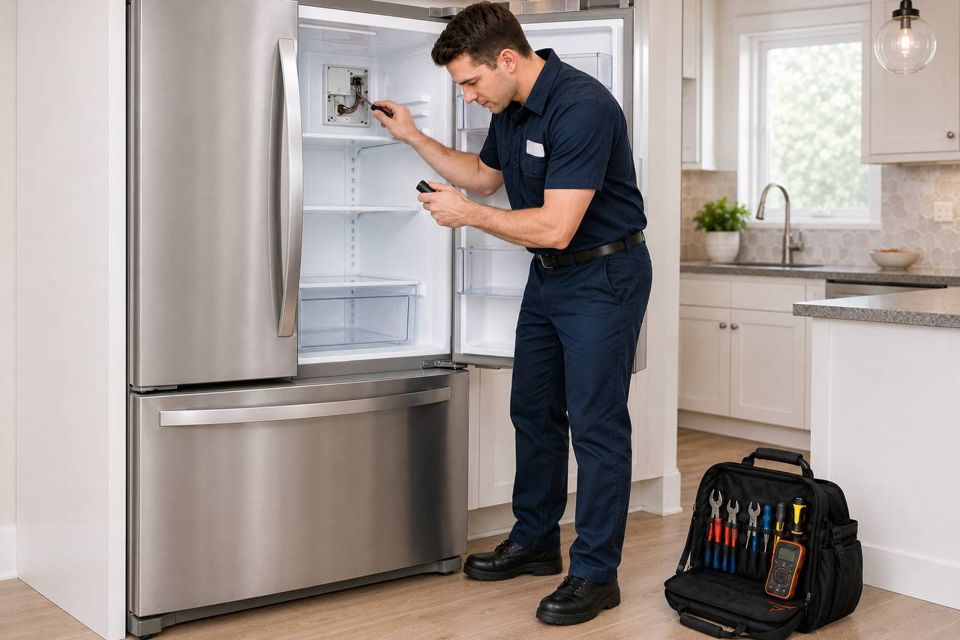
Ice Maker Repair — Browns Point, Tacoma & the Bay Side
A silent ice maker is nobody’s emergency, but a bay-side August without ice wears on a household — and the great majority of silent ice makers are a single-visit repair when the water path is traced instead of the module replaced on a hunch.
All makes & agesSame-day slots most weekdaysLog with every visit
In-door, under-counter and standalone · all six coverage areas
Ice Maker Repair on the bay side — every make, every age
The water path
How the Sweep Runs
The sweep runs from the supply stop to the bin in order: inlet valve energized and checked under pressure, fill tube examined with a light for ice, filter date read, module cycled by hand, and then a complete harvest observed from fill to drop. The module is the culprit far less often than the forums claim; the valve, the tube and the filter fail first and cost less.
A harvest watched start to finish
The Water Path, Traced to the Bin
Iced-over fill tubes, scaled valves and filters years past their date account for most silent ice makers. On Auburn’s harder supply and Gig Harbor’s well roads the scale comes early; on Tacoma’s soft water the usual finding is neglect — a filter that has not been changed since the kitchen was last remodeled.
Under-counter and standalone ice machines, popular in Browns Point entertaining kitchens and harbor boathouses, get a sweep of their own: condenser cleanliness, circulation pump, evaporator plate, bin-full sensor. Sea air on the waterfront corrodes their condensers ahead of schedule, and a thorough cleaning is frequently the entire repair.
Bad-tasting ice is a water-path complaint, not a freezer complaint. A new filter and a few discarded batches settle most of it; anything that lingers gets the reservoir and the tubing opened and cleaned.
Bring these to the intake call
No fill sound, no drop, empty bin
Cubes small, hollow or off-tasting
Bin frozen into a single block
Fine all winter, dead by July
Frost on the freezer floor below the fill tube
Under-counter unit running, producing nothing
Book Ice Maker Repair
Phone, ZIP, address, machine and the symptom. Owen rings back with a window that holds.
Symptom to first check
Where the Sweep Starts
The order is the point: the cheap, likely cause is measured before the expensive, unlikely one is discussed.
What you notice
What the sweep checks first
Silent, empty bin
Inlet valve under pressure, fill tube, module test
Hollow or small cubes
Fill volume, water pressure, filter
Bin frozen solid
Freezer temperature, bin sensor, door seal
Quits in hot weather
Ambient stress, condenser, valve pressure
Water on the freezer floor
Frozen fill tube, cracked tray
Standalone hums, no ice
Water pump, evaporator plate, bin-full sensor
Asked on the intake line
Ice Maker Repair — Asked Often
The ice has tasted strange since spring.
Filter age or stale water sitting in the line, nearly always. Replace the filter, throw away the next few batches, and if the taste outlasts that, the reservoir and tubing get cleaned out.
Ice maker fails only in hot weather.
A freezer running at the edge of its range or a valve barely reaching pressure, stressed by a warm kitchen. Both get measured, and the summer-only pattern narrows things usefully.
Does the whole ice maker assembly need replacing?
Seldom. The valve, tube or filter is the failure far more often, and observing a harvest cycle before anything is ordered is what keeps the expensive assembly on the shelf.
Coverage
Ice Makers, Area by Area
Salt on the shoreline, scale on the well roads and in Auburn — every coverage page notes what the water does locally.